Training That Multiplies: Tamara Builds a Service Cohort in Raleigh
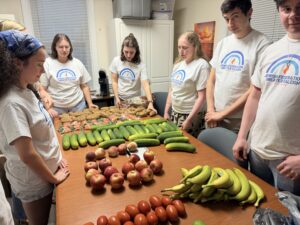
Cohort members sort fresh produce for families served by Jewish Family Services in Greater Raleigh.
Before October 2025, Tamara Zishuk had been doing work on her own time to build community with young Jewish adults. When the Federation offered her the chance to do it full time as the Senior Manager of Programs and Development, she jumped at the chance. A week into the job, she found the Catalyst Fellowship powered by Repair the World.
The Catalyst Fellowship trains Federation professionals to build their own Jewish service programs. The model pairs hands-on community service that addresses pressing local needs like food insecurity, poverty, and homelessness, and incorporates Jewish learning, issue-area education, and real reflection. This model provides young adults a joyful way to participate in Jewish life and community, as well as gives a sense of purpose and agency to effect change in the community around them. “I thought the Catalyst Fellowship went hand in hand with the mission of the Jewish Federation of Greater Raleigh,” Tamara said.
The Federation offered community-led young adult programming before, and Tamara approached her work as a relaunch, building on that history. As she shaped the revamped young adult strategy, three pillars took shape: community building, leadership training, and giving. The Catalyst Fellowship became the frame for the leadership pillar. Tamara was struck by Catalyst’s method. It didn’t hand her a finished curriculum to run–it taught her how to build one. She had to learn to build a relationship with the community, identify what that community actually needs, and then design the project to meet that need. “That’s the whole model our cohort runs on now,” she said.
“Figure out the real need, build the relationship, then build the project around it– never the other way around.”
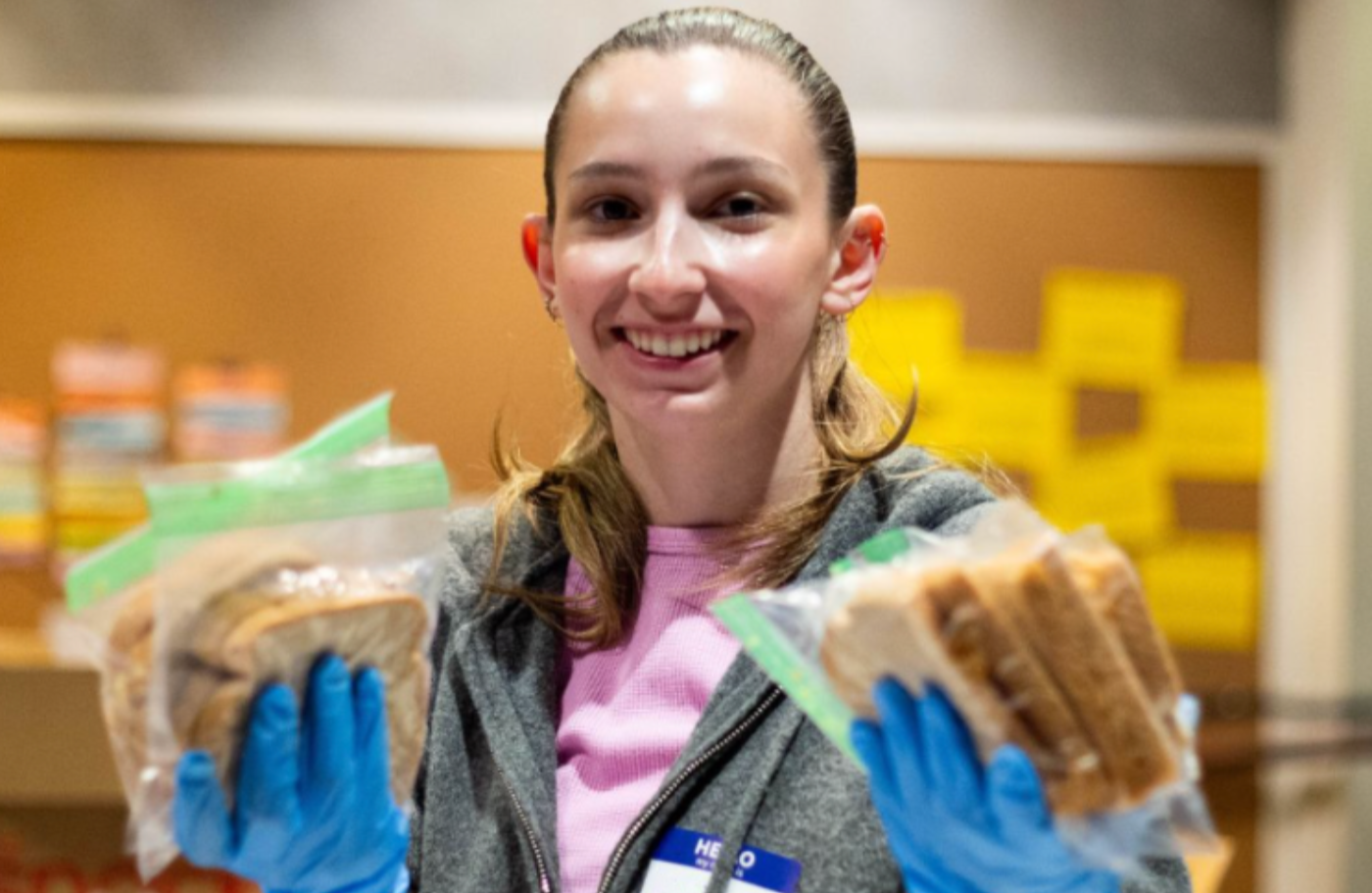
Tamara capped the Federation’s cohort at eight young adults, which was small enough to build real relationships and give each person individualized attention. The service issue areas were chosen to reflect cohort member interests and the actual needs of Greater Raleigh after the cohort was finalized. The cohort selected five areas: environmental impact and agroecology, hunger, aging, mental health, and homelessness. Cohort members planned a project for each area, built around Jewish learning, discussion. It also included concrete next steps for anyone who wanted to keep working on that issue after the project ended.
Halfway through the program, the cohort left Greater Raleigh for a weekend retreat in Wilmington, NC.
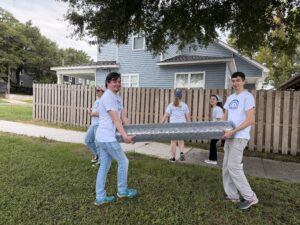
Cohort members carry a mattress into a home, putting the cohort’s focus on homelessness into practice.
“Immersive experiences really bring a group together and create more buy-in,” Tamara said. “You can’t build real trust in a one-hour session on a Tuesday night. We needed a few days where their phones were away and the only thing in front of them was each other.”
By the time the group reached Wilmington, they’d already run two projects alongside Tamara, one packing food at a Jewish Family Services pantry, another at an agroecology center. The retreat allowed them to explore the thinking behind both, as Tamara walked them through the relationship building and planning that had gone into each one.
“I wanted to peel back the curtain and help the cohort understand the entire process, not just the finished project, so they could build the next one themselves.”
The Catalyst Fellowship gave Tamara the tools to run her own projects, but she saw no reason to keep that training to herself. “Repair trained me to build service projects. If I’m the only one who ever runs one, that learning stops with me,” she said.
“Teach the community the same way, and it doesn’t stop. It multiplies.”
Now the cohort is running its own Jewish service projects, each one rooted in a need the group identified in Greater Raleigh. Every project starts with the leader writing a proposal laying out the issue to be addressed, how it connects to Jewish values, who they can partner with in the community, and who they hope to bring along. They lean on design thinking to get there: draft a first version of the project, bring it to the rest of the cohort for feedback, then revise the proposal accordingly. Tamara meets with each of them to talk through execution and feedback collection process for the project. Anyone who wants to continue their work can apply for supplemental funding. “I don’t want them to walk away with one good memory. I want them to walk away excited, and capable, to do this again, on their own, for years,” she said.
Cohort members say the approach is landing. After the Wilmington Shabbaton, one wrote, “I feel much closer to the cohort overall and have a strong idea of what I want my project to be.” Another saw the multiplying effect firsthand, calling one project “the most accessible project we have done that would be able to be repeated. I’m glad to know this is an option for me to do in the future.”
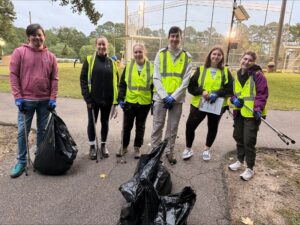
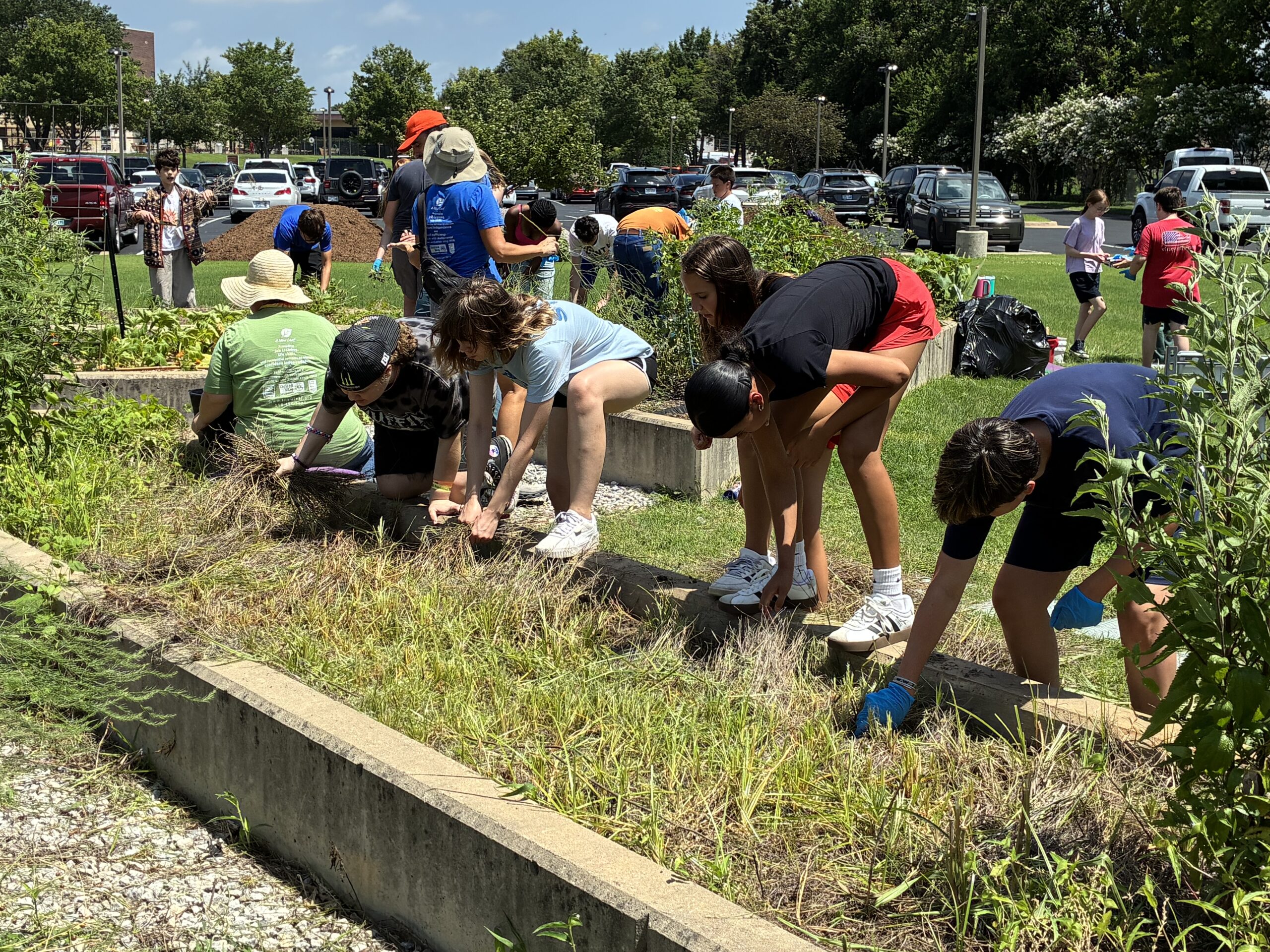
Cohort members clean up a local park, one of the projects in the cohort’s environmental impact issue area.
For some, the Jewish learning changed how they see the work itself. Reflecting on repairing the sea, tikkun hayam, one cohort member wrote that “in Jewish tradition, water is often interpreted as spiritual cleansing at least as much as physically; as such, pollution of the water feels especially egregious, and its repair of heightened importance.”
This is the clearest sign the program is working. Today, eight young adults are designing and leading Jewish service projects of their own, each rooted in a need they identified in Greater Raleigh. The Jewish Federation’s Jewish Family Services are getting volunteers who understand the issues and the Jewish values behind the work before they ever show up. Because each cohort member has learned the full process, the work no longer depends on Tamara to keep going.
If you ask Tamara why she built the program this way, she comes back to a text Repair the World introduced her to during the Catalyst Fellowship training: “From generation to generation, l’dor vador.” “L’dor vador isn’t just about passing down memory. It’s about handing someone the keys and trusting they’ll take it somewhere you couldn’t,” she said.
“If this generation is going to lead the Jewish community, and be the face of it to everyone outside it too, they need practice leading now, not a decade from now.”
She also keeps close the teaching: “We’re not obligated to finish the work, but we’re not free to walk away from starting it.” (Pirkei Avot 2:16) “We’re not fixing someone’s whole life, or an organization, or a broken system, in one afternoon of service,” she said. “But refusing to start because you can’t finish is its own kind of failure. So we start.” A year from now, she won’t measure success by what people say about the cohort. She’s measuring it by the impact of what these cohort members have created. “Success isn’t a nice quote in a newsletter. It’s walking into Jewish Family Services next year and finding a whole group of young adults who keep showing up to volunteer, not for one project but for years of them, without any of us having to ask,” she said.
Tamara started this work because it is a pressing need in Greater Raleigh. Now eight leaders are carrying it forward, one Jewish service project at a time.
Tamara Zishuk is the Senior Manager of Programs and Development at the Jewish Federation of Greater Raleigh, focusing on Young Leadership. She received her undergraduate degree in psychology from UCF, with certificates in Leadership and Service Learning, and holds two master’s degrees: one in Hospitality Management from UCF and another from HUC’s Zelikow School for Jewish Nonprofit Management. Her career has included engagement and strategy roles at UNC Hillel and the University of Miami Hillel, followed by serving as COO of a remote bookkeeping company before returning to the Jewish nonprofit world. Tamara is passionate about building strong communities through thoughtful strategy, meaningful relationships, and programs that bring people together. In her free time, she loves spending time with her husband and two dogs, hosting Shabbat dinners for friends, and traveling to National Parks.