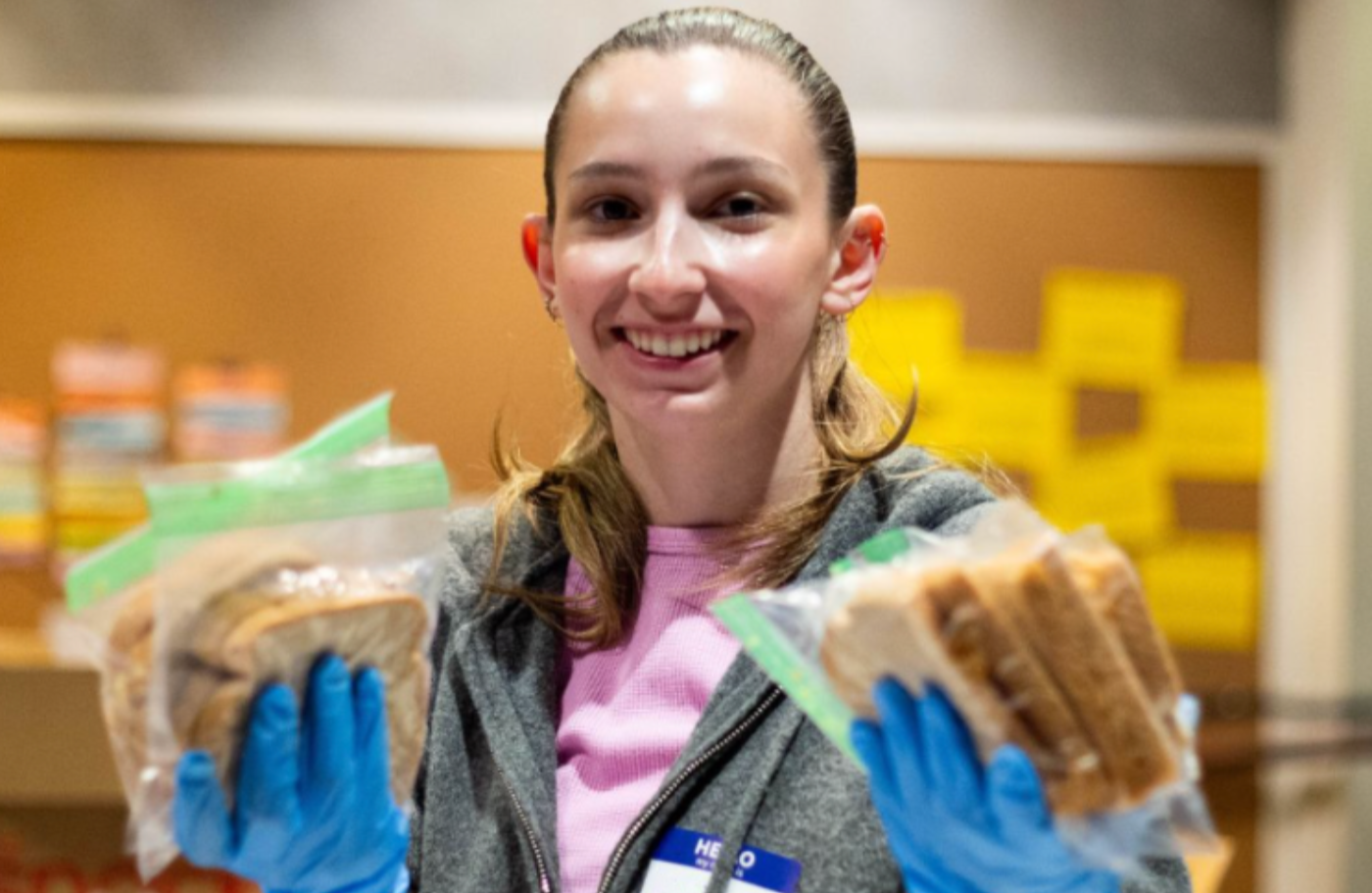
Six Years Dormant, Four Weeks to Bloom: How Isabella Brought Tulsa’s Community Garden Back to Life
Isabella Ross’s first job out of college was at the Jewish Federation of Tulsa in 2020 at the height of COVID. The Federation faced challenges large and small due to the pandemic, including keeping up its community garden. But Isabella was determined to give the garden a second life–and a way for the community to serve together.
The garden sits at the entrance to the Tulsa Jewish Federation and JCC campus, laid out in the shape of a Star of David. Built in 2003 to grow produce for the community, it once held 12 beds of asparagus, potatoes, and green peppers. But when the staff who ran it retired and partnerships fell apart during COVID, the garden went untended. For six years, the first thing visitors saw on campus was an overgrown tangle of weeds.
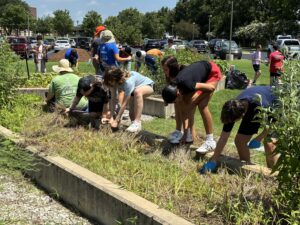
Volunteers clear years of overgrowth from the raised beds at the Tulsa Federation and JCC campus garden.
Isabella took over the garden in 2022 and tried the obvious fix: get people to take ownership. Twelve community groups signed on, each adopting a bed. For a while, it worked. Then life happened. Schedules filled up, attention drifted, and the garden went quiet again.
The real shift wasn’t another push to recruit more volunteers. It was a change in how Isabella thought about them, one that came through Repair the World’s Catalyst fellowship, which equips Federation staff to design and lead volunteer experiences rooted in Jewish values.“Repair the World and the Catalyst program really taught me the importance of volunteers,” Isabella said.
“And how we can bring in different people from different phases of life, find out what they’re interested in and how this aligns with community needs, and plug them into opportunities to serve.”
Through Repair the World’s Tzedek Cohort for JCC staff, Isabella was connected with an alum in Asheville, North Carolina, who had built her own community garden. The alum walked Isabella through what worked and what didn’t, and Isabella adapted the idea for Tulsa.
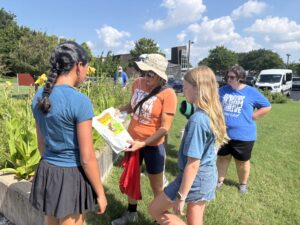
A New Leaf staff shows volunteers how worm castings help feed the soil.
It changed how Isabella thought about sustainability. Getting 12 people to show up once wasn’t the goal anymore. She needed to know what people actually had to offer, match them with the right partners, and build experiences people wanted to keep coming back to.
Repair the World’s approach to Jewish service learning helped Isabella to establish the program and make it accessible to different audiences. “A lot of our learnings were focused on meeting volunteers where they are, finding a way to build in learning and reflection in an attainable way,” she said.
“Jewish learning can be incorporated in day-to-day service opportunities large and small.”
Four Jewish values anchored the project: do not waste, bal tashchit; guardians of the earth, shomrei adamah; repairing the world, tikkun olam; and mutual responsibility, arevut. Isabella incorporated these into the garden sessions from the start, teaching a little wherever the moment allowed. In the second week, a group of kids uncovered a bunny nest while digging. “We gathered the kids all together and taught them the importance of watching what you’re doing, because you never know what you’re going to find,” Isabella said, “And also discussed the Jewish value of protecting our animals and the earth.”
The Catalyst grant gave Isabella seed money to bring on A New Leaf, a local nonprofit started by a Tulsa Jewish family foundation, that teaches gardening as a vocational skill to individuals with disabilities. A New Leaf had actually been an original partner on the garden back in 2003. The grant covered new soil, gravel, and tools, along with the hourly cost of A New Leaf’s job coach, who now leads volunteer sessions every Monday and helped train Federation volunteers directly.
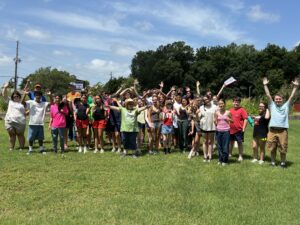
Volunteers and A New Leaf participants after a morning in the garden on Tulsa’s Zarrow Campus.
What surprised Isabella most was the speed. “It was as soon as I got the okay, I called A New Leaf. They said, let’s do it, we’ll be there next week,” she said. Her advice to anyone hoping to start something similar: “Gather information: call everyone, ask questions, find the experts and let them guide you.” Four weeks after A New Leaf came on board, people were already stopping by to ask how they could get involved.
Working alongside A New Leaf’s team taught Isabella as much as it helped the garden. “Every volunteer brings different abilities, strengths, and interests,” she said. “It is vital to find a way to make all of those work in the time you have together.”
The garden also became part of Camp Shalom, the Charles Schusterman Jewish Community Center (CSJCC) summer day camp, a benefit Isabella hadn’t expected when she started designing the project. Campers learned to garden and engage with the same Jewish values guiding the adult volunteers.
As the garden grows, Isabella hopes it will produce enough to share with local food access organizations, including the Oklahoma Food Bank, which partnered with the garden when it first got started.
“The garden is the first thing that you see on our campus, and it’s a beautiful Star of David,” Isabella said. Today, the garden is one of the first things you see arriving at the Tulsa Federation and JCC campus. But for Isabella, what matters isn’t what’s growing in the beds. It’s what’s taken root around them. Volunteers keep coming back on their own. Partnerships are built to last. And Jewish service is starting to feel less like a project and more like a habit, something the community just does.