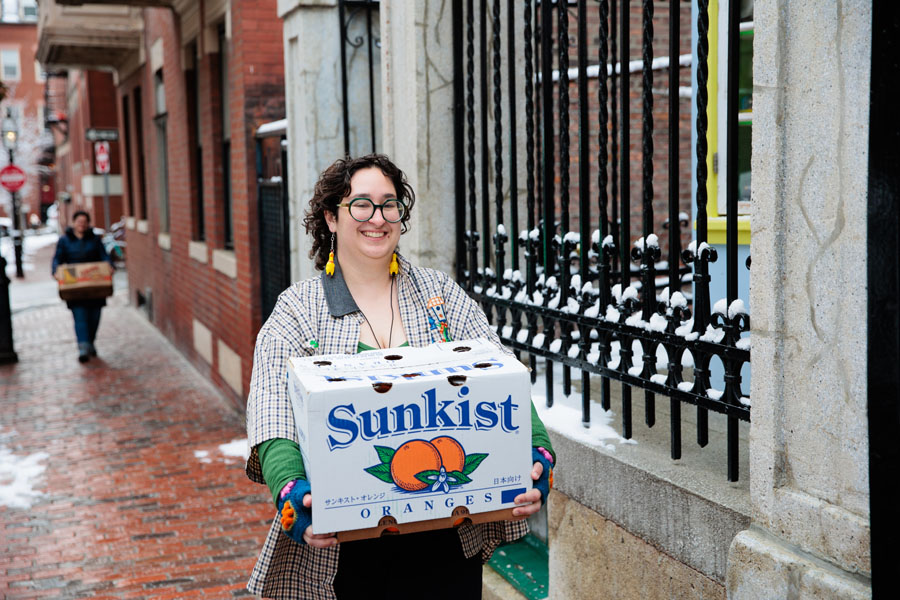
“I’m not just giving, but also learning.”
 Adriana
Service Corps Member

 Adriana
Service Corps Member
 Alexandra
Service Corps Member
 Danna
Volunteer
 Emily
Service Corps Member
 Emma
Program Director, Uri L’Tzedek
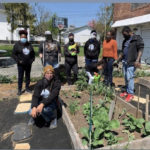 Haley
Volunteer and Former Co-Chair, Repair the World Baltimore Advisory Council
 Isabella
Catalyst Fellow
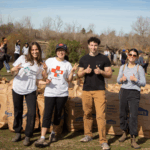 Julia
Repair the World Wildfire Response Service Corps member
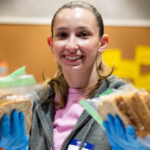 Lorenn
Tzedek Fellow
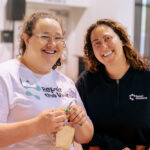 Lou
Repair Staff
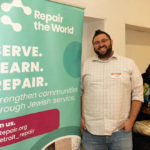 Nathan DeGroot
Jewish Service Ambassador
 Ori
Volunteer
 Rachel
Service Corps Member
 Rhonda
Jewish Social Justice Educator, Tikkun Ha-Ir
 Ryley
Service Corps Member and PeerCorps Alum
 Sally Rose
Microgrant recipient from the Rashi School
 Sarah
Volunteer
 Sarah
Service Corps Member and Chair, Repair the World Miami Advisory Council
 Savannah
Fellow and Service Corps Member
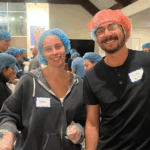 Shira
Service Corps Member
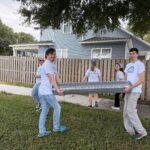 Tamara
Catalyst Fellow
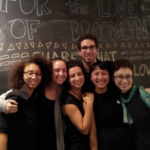 Tori
Fellow and Volunteer
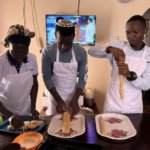 Tzion
Service Ambassador
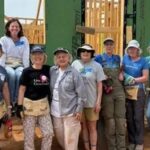 Wendy and Stephanie
Serve 250 Volunteer
“The ability to be in service (as opposed to creating opportunities for others to be in service) was the most impactful part of the trip. In addition, serving alongside members of the communities we were engaged with was invaluable.”
“I had a lot of meaningful experiences serving in Israel. Volunteering was really fun, and we saw how we can make a small difference–and it doesn’t just stop with us. It’s a small part of a chain that grows into something bigger.”
Tzion
Service Ambassador
Lou
Repair Staff
The first time Repair the World served in Orange County, 36 volunteers filled University Synagogue to make 150 cheese sandwiches for Someone Cares OC. Lou, the first staff member on the ground there, was moving between tables when one volunteer stopped her.
After her divorce, the woman said, she raised five kids alone with no child support. In those years, a simple cheese sandwich would have meant so much to her family. Now she was the one making them.
“She was sharing this in immense gratitude,” Lou said, “grateful to now be the one giving back to people who are living it today.”
Lou thought of Exodus: You know the heart of the stranger, having yourselves been strangers in the land of Egypt. “Her firsthand knowledge of hardship becomes more than just her memory. It is her mandate to act.”
One sandwich at a time, a Jewish service community takes root.
Nathan DeGroot
Jewish Service Ambassador
On an April evening, 173 Detroiters filled Breakers Covenant Church for a Passover seder unlike most. Jewish and Christian neighbors sat side by side, reading from a custom Haggadah about freedom and caring for the stranger.
Then they got up from the table and got to work.
Together, they packed and delivered 300 care kits for immigrants and others in need. Repair the World Detroit, Downtown Synagogue, Breakers Church and the Coalition for Black & Jewish Unity led the night together.
For Nathan, a Jewish Service Ambassador, the service gave the seder its meaning. “It was meaningful to be present for such an important gathering, offering a service component to the relationship building and ritual happening across the seder.
Every Passover, we retell the story of becoming free. In Detroit, 173 neighbors answered what that story asks of us.
Wendy and Stephanie
Serve 250 Volunteer
In Asheville, the people who were once helped are now the ones holding the hammers.
As part of Repair the World’s Serve 250 initiative, Wendy gathered with volunteers for a day of service with NECHAMA, the YMCA of Western North Carolina, and Asheville Area Habitat for Humanity. One team built front decks–the first steps families will take into a home of their own.
Wendy knew firsthand what recovery felt like. “NECHAMA helped my community and me recover from the devastation of Hurricane Helene,” she said. “It felt so good to continue extending those connections.”
The volunteers came from different faith communities, nonprofits, and neighborhoods. Some had never held a drill. One was a Habitat homeowner who had come back to build a home for another family.
Together it became clear that no one builds a neighborhood alone.
Emma
Program Director, Uri L’Tzedek
A few days before Yom Kippur, Emma and her fellow organizers came to North Scottsdale for Repair the World’s Fall National Days of Jewish Service with one goal: 500 cups of overnight oats for neighbors facing food insecurity.
About 11 people showed up.
Before the work began, the group studied the Yom Kippur reading where the prophet describes the fast God actually wants: share your bread with the hungry, and don’t turn away from need. Emma asked volunteers to see each cup as honoring “the spark of Godliness in the person who receives it.”
With so few hands, no one could work alone. People who arrived as strangers talked as they packed and left knowing each other.
“Some of the best community-building happens exactly when a group has to lean on each other to get the job done,” Emma says.
They filled all 500 cups, and no one stood on the sidelines.
Tamara
Catalyst Fellow
Within her first week at the Jewish Federation of Greater Raleigh, Tamara Zishuk found the Catalyst Fellowship, a partnership with Repair the World to train Federation professionals to lead service projects.
Catalyst didn’t hand her a curriculum. It taught her to start with what the community actually needs and build the project around it. “Repair trained me to build service projects,” she says. “If I’m the only one who ever runs one, that learning stops with me.”
So she passed it on. Tamara gathered eight young adults and served alongside them at a Jewish Family Services food pantry and an agroecology center. Then she took them on a weekend retreat to show them how each project came together. Now every cohort member designs and leads a Jewish service project of their own.
Tamara keeps returning to a teaching from Catalyst: from generation to generation, l’dor vador.
“It’s about handing someone the keys,” she says, “and trusting they’ll take it somewhere you couldn’t.”
Isabella
Catalyst Fellow
For six years, the first thing visitors saw at the Tulsa Jewish Federation and JCC campus was a Star of David-shaped garden lost under weeds. Isabella Ross was determined to bring it back.
Twelve community groups adopted beds, then drifted away. Through Repair the World’s Catalyst fellowship, she stopped counting heads and started considering what people could bring, who were the right partners, and how to build experiences people would return to. “Every volunteer brings different abilities, strengths, and interests,” she says. “It is vital to find a way to make all of those work in the time you have together.”
Isabella brought in A New Leaf, a local nonprofit that teaches gardening as a job skill to people with disabilities. Four weeks later, neighbors were stopping by to ask how to help.
The weeds are gone. What’s taking root now is a community that keeps showing up.
Tzion
Service Ambassador
Tzion’s path to Jewish service started in Kampala, Uganda, home to the Abayudaya, a Jewish community that is nearly a hundred years old. As a Repair the World Jewish Service Ambassador, he led more than a dozen service projects in his first year, ranging from clearing drainage systems where malaria-carrying mosquitoes breed to braiding challah with volunteers.
Tzion’s commitment to service didn’t just stay in Uganda. For the past four years he was on staff at URJ Camp Newman in California, a Repair the World partner site, where he taught campers how to garden.
“It feels like a privilege that I’m able to pass on these skills,” he said.
Tzion headed to Israel in August to begin rabbinical study at Pardes. His advice is straightforward. “Serve with passion,” he said, “and do service events that resonate with you the most.”
Sarah
Volunteer
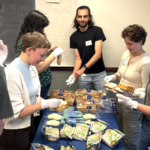
A former Hillel professional, Sarah was new in town and looking for a Jewish community. Repair’s Chicago City Director and Rabbi Benoff of Chicago Sinai Congregation invited her to an evening bringing Sinai together with members of the Church of Jesus Christ of Latter-day Saints. A tornado warning nearly brought the plan to a halt. Sarah ventured out anyway. “It really was worth it to build bridges and build relationships,” she said.
The group made sandwiches for neighbors in need, and had honest, open conversations about their faiths and what service means to each of them. “We weren’t just having a fun dinner and then making sandwiches and leaving,” Sarah says. “We were really getting to know each other and getting to know each other’s religions.”
She went home with new friends from both communities, lunch dates, and plans to keep serving together.
Tori
Fellow and Volunteer
When Tori moved to New York after college, she wasn’t looking for love. She was looking for a Jewish community rooted in purpose.
Through Repair the World’s year-long Fellowship, Tori not only found the Jewish community she sought, but met her wife Allison.
Week after week, Tori and Allison served together at food pantries, legal clinics, and community gardens across the city. Surrounded by peers from every kind of background, Tori felt safe coming out for the first time.
Tori and Allison’s friendship grew into love. “We would not have met if not for Repair,” Tori said. This June, they married. Two Fellows from their cohort signed the ketubah.
Today, Tori works at Repair, and still volunteers at a Brooklyn food pantry every other week. She came to Repair looking for community and found so much more.
Alexandra
Service Corps Member
In the summer of 2024, Alexandra was new to Denver and far from home. She joined Repair’s Service Corps hoping to meet people, get to know her new city, and contribute to her community. What she found was something much deeper.
Alexandra was placed with Showers for All, packing hygiene kits for neighbors experiencing housing insecurity. Each week, her cohort explored texts and talked about how they connected to their work. “I feel like volunteering informs my Judaism, and my Judaism informs my volunteering,” she said. She volunteered weekly after her cohort ended, then came back for a second cohort with Jewish Family Services, serving for more than 140 hours in all.
Today, Alexandra is a Yahel fellow in Israel, teaching English and running a library program in a local park.
“One person doesn’t have the power to solve a systematic problem all on their own,” she said. “It takes tons of different people together to do that.”
Ryley
Service Corps Member and PeerCorps Alum
Ryley learned early on that service doesn’t just have a positive impact on a community; it has a positive impact on her.
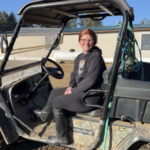
Ryley’s love of service started as a PeerCorps member at Repair the World Detroit, where she took part in spring clean-ups. Today, she’s a third-year college student balancing classes, internships, career prep, and Service Corps. “I chose to participate in the Service Corps to help keep myself accountable to volunteering,” she says. “The structured time commitment ensures I consistently show up and serve.”
Each week, she’s at HopeWell Ranch, where veterans living with PTSD and children facing mental, emotional, and physical challenges heal through time with horses. Ryley helps with feedings, gets the horses ready for spring riding season, and takes photos that help the ranch tell its story.
What began as a habit became a value, and then something more. “Service is about helping others for the greater good without the expectation of something in return,” she said.
Rhonda
Jewish Social Justice Educator, Tikkun Ha-Ir
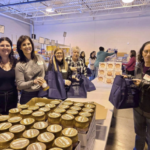
Rhonda’s mother, husband, two adult children, and son-in-law were making sandwiches. Three generations of her family stood side by side at the Milwaukee JCC, preparing food and tying no-sew blankets on Good Deeds Day, part of Repair the World’s National Days of Jewish Service.
“We were over 200 people strong working in community, laughing with friends and strangers, and teaching our young generations the value of service,” Rhonda said. “It was a tremendous day of seeing our Jewish values and learning show up for the broader Milwaukee community and our partners. The day was a living, breathing example of Jewish joy.”
Together, volunteers gave 625 hours, packed 1,000 care kits, and distributed 1,850 pounds of food for neighbors.
For Rhonda, it’s a lesson worth passing down. “We all have something to give,” she said, “and we all have something to receive.”
Emily
Service Corps Member
Emily grew up Jewish, “with an emphasis on the ‘-ish.’” As a kid, Judaism mostly meant her grandmother’s potato kugel. But after law school, she went looking for more: community, learning, and a way to live her Jewish values. She found it at Repair the World Bay Area.
“Tikkun olam and tzedakah were words I had heard,” she said. “I certainly did not know how to embody them.”
Over four years, Emily has joined nearly 200 Repair service programs and seven Service Corps cohorts. She has given more than 369 hours to local nonprofits tackling food and housing insecurity, and offered pro bono legal help to Jewish Family and Children’s Services.
Emily discovered an entirely new dimension of Judaism, one grounded in action. Service has connected Emily more deeply to both the Jewish community and the broader Bay Area community around her.
Lorenn
Tzedek Fellow
For years at the JCC San Francisco, Lorenn pointed young adults toward service. Then she joined Tzedek, a partnership between Repair the World and JCC Association of North America training Jewish professionals to lead service projects themselves. “I love the way [Tzedek] made the Jewish education piece really approachable and integrated into the service ,” she said
She launched the Lunch Club, where every third Tuesday, young adults pack 200 lunches for St. Vincent de Paul Society, which serves neighbors facing food and housing insecurity.
One year and 2,400 sandwiches later, half the volunteers are returning, often with a friend. A young woman new to the city told her, “I’m making friends and finding a community here.”
In a world that feels chaotic, Lorenn starts small. “This one sandwich is going into the hands of a person, and that person’s day is going to be shifted,” she said. “These small touch points certainly add up.”
Savannah
Fellow and Service Corps Member
In 2018, Savannah knew she wanted to live in Pittsburgh. She just didn’t know what to do there. “I wasn’t ready to make a job decision,” she says. “That’s when I found Repair the World.”
Months into her Fellowship, the Tree of Life shooting shook the city. “I remember thinking, ‘How can I support?'” she remembers.
Savannah isn’t Jewish, but Repair gave her a way to show up, and a community that welcomed her in. She served with partners working on housing, food access, and incarceration. At the Allegheny County Jail, Savannah worked with the Carnegie Library to help people preparing for re-entry, sharing resources and résumé support.
Years later after moving to Brooklyn, Savannah knew how to find her people again. She joined Repair’s New York Service Corps, packing groceries each week at the Crown Heights JCC Food Pantry and studying Jewish texts with her cohort.
“I learned how to connect with groups who weren’t necessarily Jewish by lifting up the universal values within the tradition and tying them directly to our service work,” she says. Today she’s the food pantry’s volunteer coordinator.
“We can exist in a space with people we disagree with on many things,” she says, “but not on the fact that our neighbors should be taken care of.”
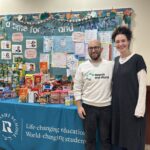
Sally Rose
Microgrant recipient from the Rashi School
When SNAP benefits were delayed, parents kept asking Sally, the Rashi School’s social justice coordinator, how to help. A Repair the World microgrant gave her the answer.
Sally paused her curriculum for three weeks and devoted three weeks before Thanksgiving to a food security project that connected Jewish values with action. Every grade studied the same Midrash: when we feed the hungry, we are welcomed into the gates of the divine. Together, the school community packed Thanksgiving meal kits for local families.
During the project, two first graders dedicated a weekend playdate to selling snacks outside their synagogue and raising more than $100 to feed families for Thanksgiving. “This is the first time I’ve ever had such young kids decide to really take the reins,” says Sally.
What started as a response to a crisis evolved into what Sally described as “a community-building event that has a ton of heart and is bringing people a ton of joy.”
Sarah
Service Corps Member and Chair, Repair the World Miami Advisory Council
Sarah grew up watching her parents find ways to serve. Her mother led the school PTA. Her father volunteered generously. For her family, service was simply part of being Jewish.
“It was never just about giving money,” she reflected, “as much as giving your time and showing up with compassion.”
When she moved to Miami, Sarah went looking for that feeling again. She found it at her first Repair the World program.
Alongside a full-time job, she joined Repair Miami’s Service Corps and gave more than 60 hours to the garden at the Belafonte Tacolcy Center in Liberty City, where fresh, affordable food can be hard to find. Today it’s home to a butterfly garden and native plants. Sarah now chairs Repair’s Miami Advisory Council. She’s one of more than 12,250 people who have served with us in Miami since 2017.
“This is a shared world,” Sarah said. “Being Jewish is about being a blessing to others.”
Shira
Service Corps Member
Every Monday at 5 a.m., while most of campus slept, three CU Boulder students were already serving meals at a nearby homeless shelter. They were part of a Service Corps cohort run by Repair the World Colorado and CU Boulder Hillel, a partnership that brought nearly 400 students into Jewish service.
Shira, Hillel’s Program Manager, watched many of them find their way into Jewish life through action. “Many of our students, when you ask them what connects them to their Judaism, cite tikkun olam as a core value,” she said.
The students serve on issues like housing insecurity and environmental justice, and they pair every program with Jewish learning. “They were able to not only go out and do good, but also demonstrate what the Jewish students at CU Boulder stand for,” Shira said. She was inspired too, and in 2024 she became a Jewish Service Ambassador herself.
Ori
Volunteer
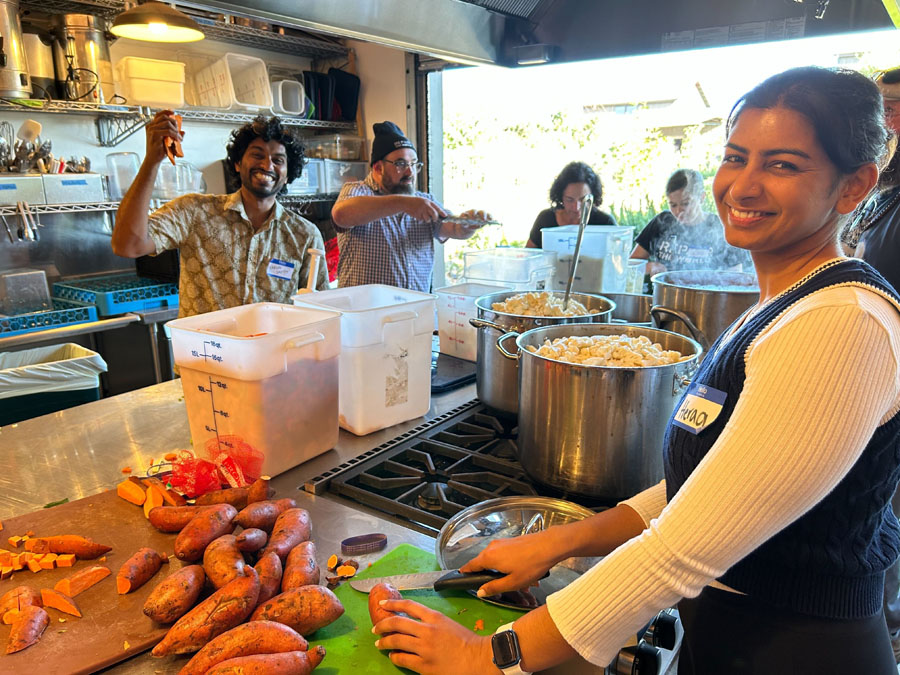
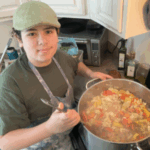
Most Wednesdays, Ori Goldmiller is at a cutting board, chopping sweet potatoes that were headed for the trash.
His commitment started as part of his bar mitzvah project. “I love food. I love making food. I love eating food,” he said. So he joined Repair’s weekly service program with Souper Saucers, which turns surplus ingredients from local markets and caterers into soups and meals for community fridges.
The project ended, but Ori kept coming. More than a year later, he rearranged his school schedule to keep his Wednesdays free. The Jewish learning built into each shift changed how he sees the bruised apples and scraped trays around him. “There’s definitely enough food for everyone,” he said. “We just can’t distribute it to everyone.”
Ori feels how heavy the world is right now. He shows up anyway.
“Even if you’re helping one person,” he said, “you’re bringing just a little more joy into the world.”
Julia
Repair the World Wildfire Response Service Corps member
Julia watched a mother and her young daughter walk into a wildfire relief center in Los Angeles. When the girl spotted pink shower caddies instead of gray ones, her eyes lit up.
“That simple choice brought so much joy,” said Julia.
After the January fires, Julia spent four months at the National Council of Jewish Women Los Angeles, which had turned its thrift stores into relief hubs. Every center was set up so families could choose what they needed, an act of kavod, dignity. Julia greeted families, coordinated volunteers, and trained new ones.
For Julia, the work came down to one idea. “Service isn’t just about helping—it’s about building connection, offering dignity, and showing people they are not alone.”
When a fire takes everything, getting to choose is where rebuilding begins.
Rachel
Service Corps Member
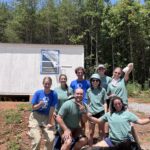
Rachel had spent five months at the Elizabeth Foundation as a Repair the World Service Corps member when a member told her coming there saved her life. Rachel had been handing out Narcan and offering harm reduction to people facing addiction and housing insecurity. She treated every person with kavod, dignity.
Rachel recalled an old teaching. “In Judaism, they say to save one life is as if you have saved an entire world.”
Service has been part of her Jewish life since childhood, when her synagogue opened its classrooms to unhoused families. At Repair, she became a leader. As a Service Ambassador, Rachel connected with The Sandwich Project and rallied her peers to pack more than 2,528 sandwiches for neighbors facing hunger. She’s since led volunteers stocking community fridges and helping Asheville rebuild after Hurricane Helene.
Rachel said, “Not every change needs to be something massive. If you’re helping an individual, you’re helping an entire world.”
Adriana
Service Corps Member
Inside Everglades Correctional Institution, more than 60 singers gather to rehearse. They call themselves the Bluebirds Choir.
University of Miami music therapy student Adriana got involved with the Bluebirds when she joined Repair the World Miami’s Service Corps and was placed with service partner Miami Sound Space. She helped plan events and spent breaks talking with the singers, building friendships across prison walls.
Raised in a multi-faith home, Adriana felt her Jewish connection grow stronger through the work. “The Jewish religion is inspiring to me because of the service element,” she says.
One moment stays with her. Miami Sound Space taught the Bluebirds’ original song to the wider community, filmed them performing it, and brought the video back to the choir.
“It felt really beautiful to watch that realization that people do care,” Adriana says, “even if you can’t see them.”
Danna
Volunteer
Danna grew up in a Christian household. From sundown Friday to sundown Saturday, her family spent much of that time volunteering.
Years later, in New York City, she found that rhythm again with Repair the World. Her first project, in 2014, focused on housing. She served at the TLC Women’s Shelter in East New York, and listened as longtime residents described being priced out of neighborhoods they’d always called home. “My life changed,” she said.
This experience taught her what Jewish tradition calls kavod ha’briyot, the preciousness of each human. “It was a reality check for me,” she said.
Now a working mother of two, Danna still serves whenever she can. When neighbors see her out canvassing, they get curious, and some step up to volunteer themselves.
For Danna, “Volunteering includes walking through the door with an open mind and an open heart.”
Haley
Volunteer and Former Co-Chair, Repair the World Baltimore Advisory Council
It was a bitterly cold day in Baltimore in 2019. Still, Haley showed up for Repair Baltimore’s Mitzvah Day.
Then they kept showing up. Soon, Haley was volunteering regularly at Cherry Hill Urban Community Garden, which grows fresh, healthy food for neighbors who have little access to it. Working beside the farm coordinators drew Haley into neighborhood advocacy and food justice. One day, watching dental students volunteer at the garden, Haley saw how fresh food shapes a whole community’s health.
Haley describes themselves as an advocate of social change in Baltimore, and a leader in the LGBTQIA+ community, public health, and community development in particular. Service became a way for them to live this passion; they became the co-chair of the Repair the World Baltimore Advisory Council, and reflected that “service has become a gateway to advocacy, which I did not realize was possible.”
As Haley’s service grew so did the strengthening of their connection to the Jewish community. “As someone who was not particularly religiously observant, Repair the World has been a way for me to find my place within a community I didn’t always feel connected to.”